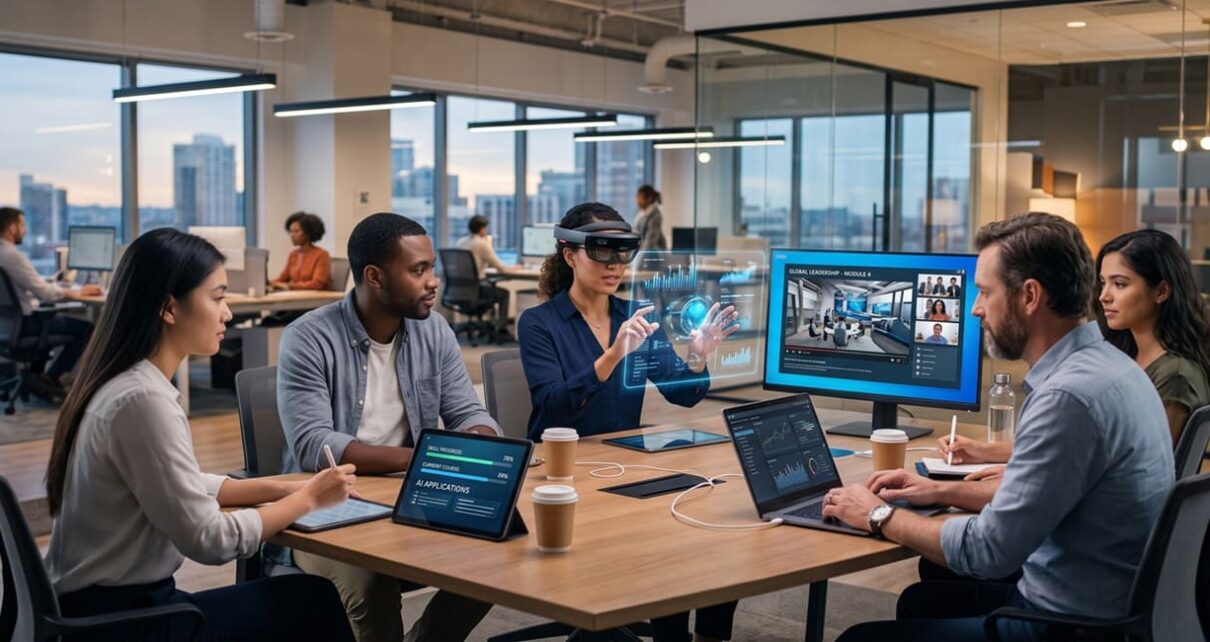
The workplace has changed significantly over the past decade. As businesses become more digital and teams increasingly work across different locations, traditional approaches to employee training and professional development are also evolving. Companies can no longer rely only on occasional workshops or annual training sessions to help employees improve their skills. Instead, modern organizations are turning to technology to create continuous, accessible, and personalized learning experiences.
From artificial intelligence and digital learning platforms to collaboration tools and virtual training environments, technology has made professional development more flexible than ever. Employees can now access educational resources from almost anywhere, learn at their own pace, and collaborate with colleagues across borders.
For businesses, this transformation offers an opportunity to build stronger teams while helping employees stay prepared for changing industry requirements. Companies that create a culture of continuous learning can improve employee engagement, encourage innovation, and develop the skills needed for long-term growth.
Related Articles:
- What is Artificial Intelligence in Computer Science
- Artificial Intelligence vs Human Intelligence
- Artificial Intelligence in Electronics: From Design to Production
- Cloud Video Surveillance for Network Security in Smart Factories
- Deploying Neural Networks on Microcontrollers: Tools & Techniques
How Technology Is Changing Workplace Learning
Traditional corporate learning often involved employees attending in-person seminars, workshops, or classroom-based training sessions. While these methods can still be valuable, they may not always be practical for modern organizations with distributed or international teams.
Technology has made workplace learning more accessible and adaptable. Employees can participate in virtual training sessions, watch educational videos, complete interactive courses, and access professional resources without being physically present in the same location.
Digital learning platforms also allow organizations to provide training materials to employees based on their roles and development needs. A marketing professional, for example, may have access to courses related to digital marketing and analytics, while a software specialist can focus on new technologies and technical skills.
Another important advantage is flexibility. Employees can often complete online courses according to their schedules rather than following a fixed classroom timetable. This makes it easier to combine professional development with daily responsibilities.
Technology also makes it possible to measure learning progress. Companies can use digital platforms to monitor course completion, evaluate performance, and identify areas where employees may need additional support. As a result, professional development becomes a more structured and measurable part of the workplace.
AI and Digital Platforms for Employee Development
Artificial intelligence is becoming an increasingly important part of professional learning. AI-powered tools can help employees find relevant information, receive personalized recommendations, and explore educational content based on their individual interests and skill levels.
For organizations, AI can also support the identification of skills gaps. By analyzing performance data and professional requirements, companies can better understand which capabilities their teams may need to develop. This information can then be used to create more relevant training programs.
Digital platforms further expand these opportunities by bringing different learning resources together in one place. Employees may be able to access courses, webinars, industry materials, internal documentation, and other educational resources through a single digital environment.
However, technology should support human development rather than replace it. Mentorship, feedback, communication, and practical experience remain essential elements of professional growth. The most effective corporate learning strategies combine digital tools with support from managers, colleagues, and experienced professionals.
AI and digital learning platforms are therefore best viewed as tools that make professional development more personalized and accessible. They can help employees identify opportunities to improve while giving companies new ways to support the growth of their teams.
Collaboration Technologies for Global Teams
As businesses expand internationally, employees often need to work with colleagues located in different countries and time zones. Effective communication and collaboration are therefore essential for maintaining productivity and building strong professional relationships.
Modern collaboration technologies have made global teamwork considerably easier. Video conferencing platforms allow teams to communicate face-to-face virtually, while project management tools help employees coordinate tasks and monitor progress. Cloud-based workspaces also allow teams to share documents, exchange information, and collaborate on projects in real time.
These technologies can have an important role in professional development as well. Employees can participate in international meetings, learn from colleagues in different markets, and gain exposure to new perspectives and working methods.
For multinational companies, this exchange of knowledge can be particularly valuable. Team members from different cultural and professional backgrounds may approach challenges in different ways. When collaboration is supported by effective technology, these diverse perspectives can contribute to creative thinking and better decision-making.
Technology can also help overcome geographical barriers. An employee does not necessarily need to travel to another country to participate in a training session or collaborate with an international team. Virtual communication and digital learning tools make cross-border professional development more accessible.
Why Continuous Learning Is a Competitive Advantage
The business environment is constantly changing. New technologies, customer expectations, regulations, and market trends can influence how organizations operate. Skills that are valuable today may require updating tomorrow.
This is why continuous learning has become an important competitive advantage for modern businesses. Companies that encourage employees to develop their skills are better positioned to adapt to change and respond to new opportunities.
Continuous learning can also contribute to employee engagement. Professionals are more likely to feel motivated when they can see opportunities to improve their knowledge and advance their careers. A clear focus on development can help employees understand how their individual growth connects with the wider goals of the organization.
From the company’s perspective, investing in existing employees can also strengthen talent retention. Professionals who have access to learning opportunities, mentorship, and career development may be more likely to build long-term careers within an organization.
A culture of learning can additionally encourage innovation. Employees who regularly explore new ideas and develop new skills may be more prepared to identify improvements, solve problems, and adapt to changing circumstances.
For these reasons, continuous learning is no longer simply an additional benefit offered by employers. It has become an important part of building a resilient and future-ready workforce.
Case Study: How Soft2Bet Supports Professional Growth Through Technology
Soft2Bet provides an example of how a modern international company can combine technology, collaboration, and professional development to support employee growth.
As businesses operate across multiple markets and bring together professionals from different backgrounds, maintaining effective communication and knowledge sharing becomes increasingly important. Digital collaboration tools can help teams stay connected, exchange information, and work together regardless of geographical location.
Technology also creates opportunities for employees to access learning resources and participate in professional development activities without being limited by physical location. Virtual meetings, online educational materials, digital communication channels, and industry events can all contribute to a broader learning environment.
For an international organization, these tools can be especially useful because employees may work with colleagues who have different professional experiences and cultural perspectives. Digital collaboration makes it easier for team members to share knowledge and learn from one another.
At the same time, technology is only one part of professional development. A strong learning culture also depends on supportive leadership, clear career opportunities, knowledge sharing, and an environment where employees are encouraged to develop their skills.
By combining these elements with modern digital tools, companies can create a workplace where professional development becomes an ongoing process rather than an occasional activity. Employees can continue expanding their expertise while organizations benefit from a workforce that is better prepared to respond to changes in the market.
The broader lesson is that technology can make corporate learning more flexible, connected, and accessible. When supported by a strong company culture, it can help organizations create better opportunities for employees to grow professionally while strengthening their ability to compete in an evolving business environment.
The Future of Technology-Driven Professional Development
The role of technology in corporate learning is likely to continue expanding. Artificial intelligence, automation, virtual collaboration, and personalized digital learning are expected to become increasingly common across different industries.
Future learning systems may become even more personalized, helping employees identify specific skills they need to develop based on their career goals and professional responsibilities. At the same time, organizations may use technology to better understand workforce needs and create development programs that align with business objectives.
However, successful professional development will continue to require a balance between technology and human interaction. Digital platforms can provide information and flexibility, but mentorship, teamwork, communication, and practical experience remain critical to meaningful growth.
Companies that successfully combine technology with a supportive learning culture will be better positioned to develop adaptable and motivated teams.
Conclusion
Technology is transforming the way companies approach corporate learning and professional development. Digital platforms make education more accessible, AI can support personalized learning, and collaboration technologies allow international teams to share knowledge more effectively.
For employees, these developments create new opportunities to improve skills and build long-term careers. For businesses, continuous learning can strengthen innovation, adaptability, employee engagement, and talent retention.
The experience of companies such as Soft2Bet demonstrates how technology can become part of a broader approach to professional growth. By combining digital tools with collaboration, knowledge sharing, and career development opportunities, organizations can create an environment where employees are encouraged to keep learning and progressing.
Professionals interested in exploring career opportunities within an international and growth-focused environment can learn more through Soft2Bet Careers, where they can discover available opportunities and become part of a team focused on continuous professional development.
Cloud Video Surveillance for Industrial Network Security in Smart Factories
Techniques and Tools for Deploying Neural Networks on Microcontrollers

