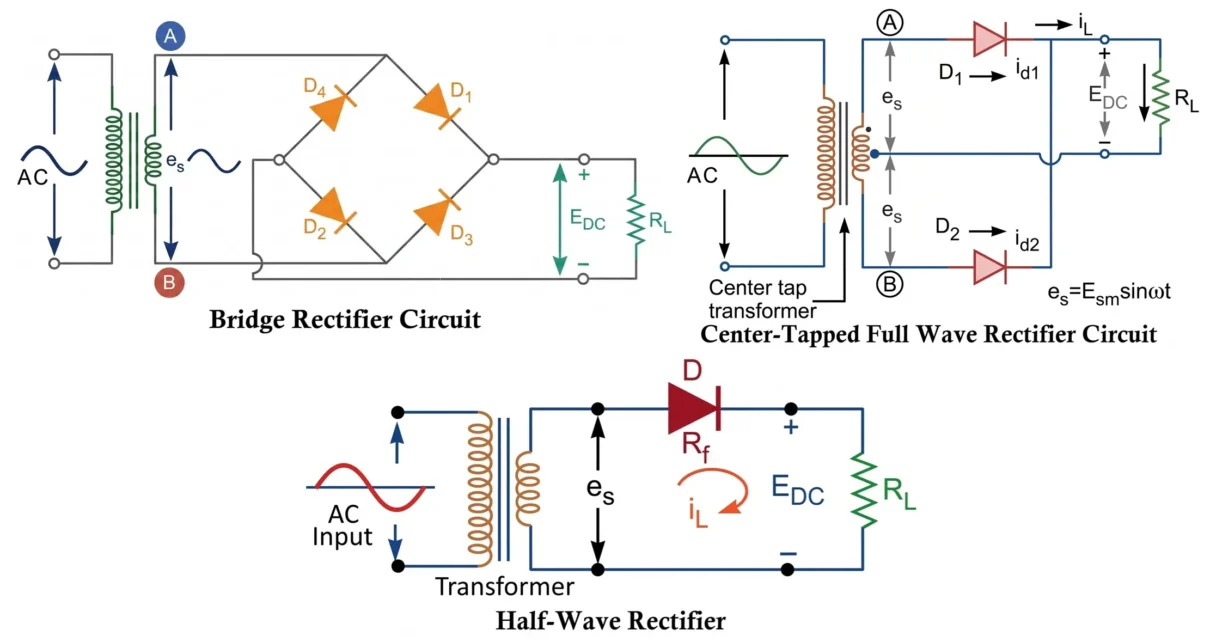
A rectifier is an electronic circuit that converts alternating current (AC) into direct current (DC). Depending on the circuit configuration and number of diodes used, rectifiers are classified into three major types: Half-Wave Rectifier, Center-Tapped Full-Wave Rectifier, and Bridge Rectifier. Although all three perform the same basic function of AC-to-DC conversion, they differ significantly in […]
Tag: Conclusion
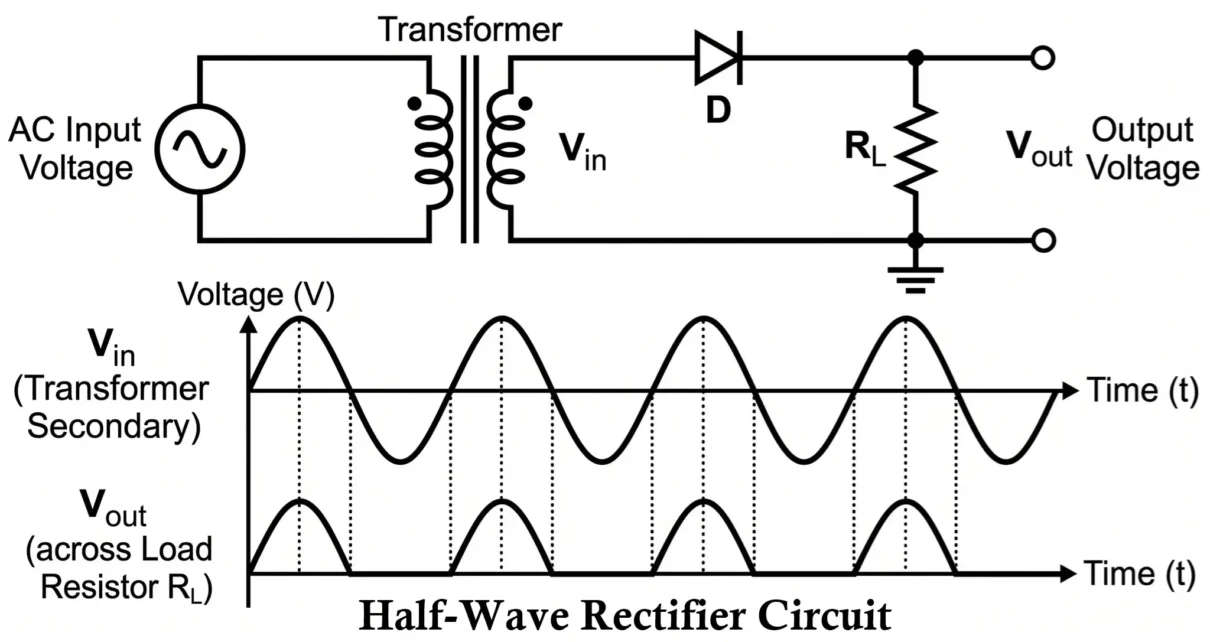
Half-Wave Rectifier Circuit Design and Performance Analysis
In this article, we will study the circuit design, working principle, mathematical analysis, performance parameters, advantages, disadvantages, and practical applications of the Half-Wave Rectifier in detail. Electronic circuits such as computers, televisions, communication equipment, battery chargers, and industrial control systems require a direct current (DC) supply for proper operation. However, the electrical power available from […]
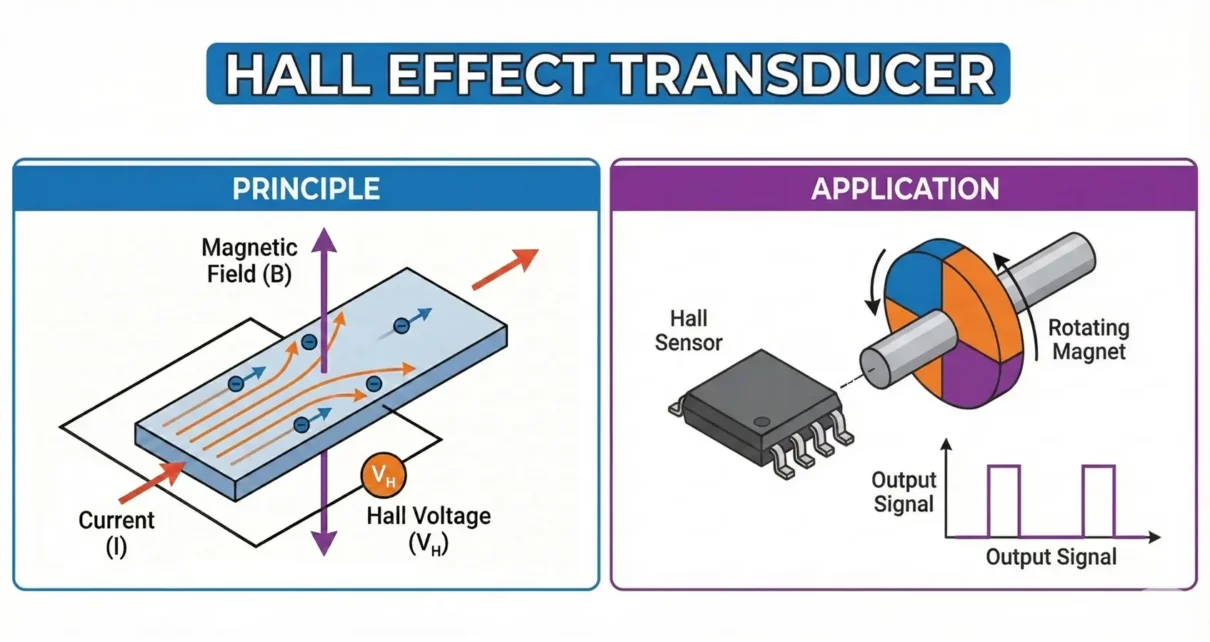
Hall Effect Transducer Construction, Working and Applications
A Hall effect transducer is a sensor that detects a magnetic field and converts it into a proportional electrical signal using the Hall effect phenomenon. It is widely used for current sensing, position sensing, speed detection, proximity sensing, and magnetic field measurement in industrial, automotive, and consumer electronic systems. Unlike conventional mechanical or contact-based sensors, […]
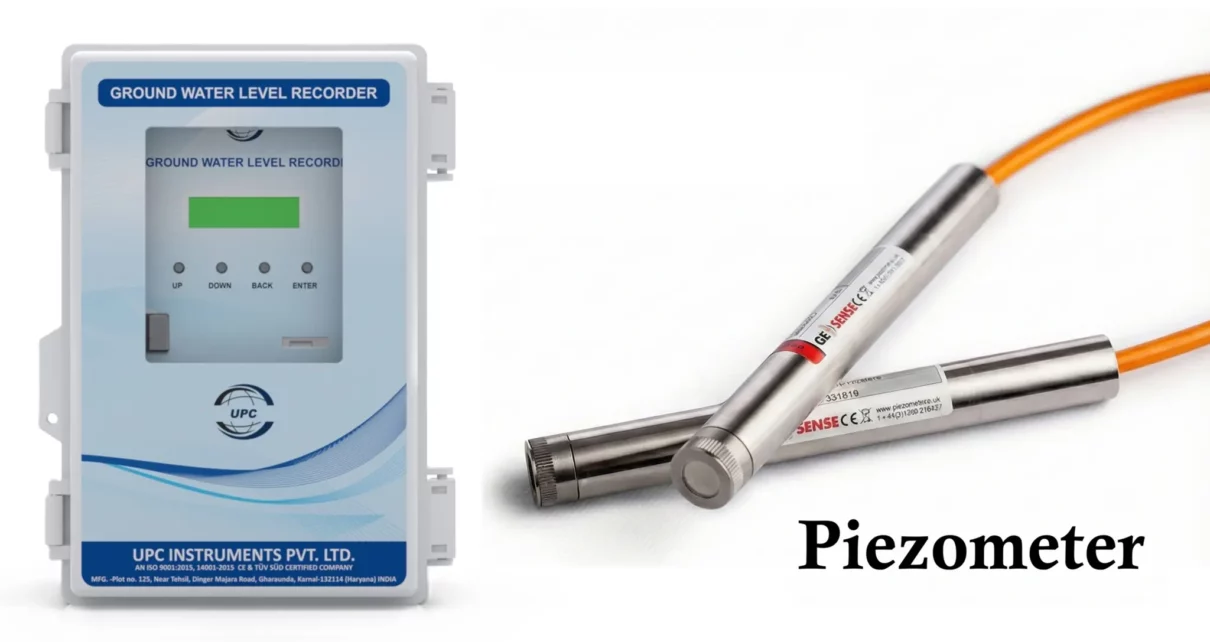
What Are Piezometers? Working, Types and Applications
A piezometer is a geotechnical sensor that is employed for measuring porewater pressure at the ground level, which is called the piezometric level. Its main features are to measure water pressure in the earth, soil, and strong concrete designs. Pore pressure gauges provide data for the magnitude of pore pressures and evolution. We can also […]